

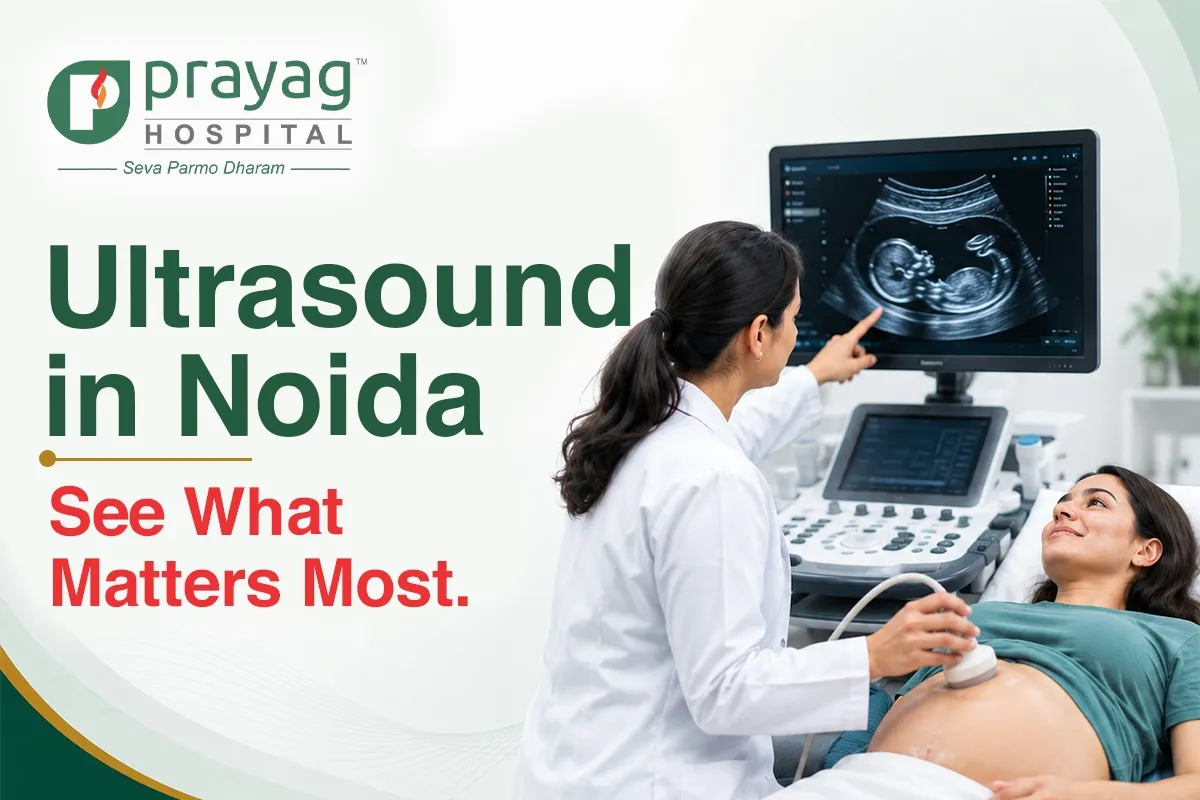
An ultrasound is one of the most widely used and trusted imaging tests in modern medicine. It is safe, painless, radiation-free and gives your doctor a real-time view of what is happening inside your body. Whether you are an expecting mother, someone managing a health condition or a patient sent for a routine diagnostic check, chances are you will need an ultrasound at some point.
If you are searching for a reliable ultrasound in Noida, this guide will help you understand the different types of scans available, what they are used for, how to prepare and when your doctor may recommend one. At Prayag Hospital, Sector 41, Noida, our radiology department offers a full range of ultrasound services under one roof, supported by experienced radiologists and modern imaging equipment.
What Is an Ultrasound Test?
An ultrasound test, also called sonography, uses high-frequency sound waves to create live, detailed images of the organs, tissues and blood vessels inside your body. A small handheld device called a transducer is moved over the skin, sending sound waves into the body and capturing the echoes that bounce back. These echoes are converted into live images on a high-resolution monitor.
Because it uses sound waves rather than radiation, an ultrasound is considered very safe. This is exactly why it is the preferred method for monitoring pregnancy and for examining soft tissues that an X-ray cannot show clearly. Most scans are quick, cause no discomfort and require little to no downtime.
Types of Ultrasound Available at an Ultrasound Centre in Noida
Not every ultrasound is the same. Different scans are designed for different parts of the body and specific diagnostic purposes. A well-equipped ultrasound centre in Noida offers:
2D Ultrasound
This is the standard and most common scan. It produces flat, black-and-white cross-sectional images and is used for the majority of diagnostic needs, from abdominal evaluations to early pregnancy checks.
3D Ultrasound
A 3D scan captures multiple images from different angles and combines them into a three-dimensional picture. In pregnancy, it offers a lifelike view of the baby's facial features and structural anatomy.
4D Ultrasound in Noida
A 4D ultrasound in Noida takes the 3D image one step further by adding real-time motion—essentially a live video of your baby yawning, stretching, or moving in the womb, assisting doctors in dynamic fetal assessment.
Doppler and Color Doppler in Noida
A Color Doppler in Noida scan studies blood flow through arteries and veins. It displays flow direction and speed in colour, detecting blockages, clots, DVT, and umbilical cord flow during pregnancy.
Transvaginal & Pelvic Ultrasound
These scans give a high-resolution view of the uterus, ovaries, cervix and pelvic floor. Frequently used in gynaecology, fertility evaluations, and first-trimester pregnancy assessments.
Abdominal Ultrasound
Examines vital organs including the liver, gallbladder, kidneys, pancreas, and spleen. It is frequently recommended for abdominal pain, gallstones, fatty liver, and kidney stones.
Pregnancy Ultrasound in Noida: What to Expect
For expecting mothers, ultrasound is an essential part of prenatal care. A pregnancy ultrasound in Noida is used to confirm pregnancy, track the baby's growth, check the position of the placenta, assess amniotic fluid and monitor the overall health of both mother and baby.
Confirms intra-uterine pregnancy, checks fetal heartbeat, rules out ectopic pregnancy, and calculates accurate gestational age and estimated due date.
Comprehensive scan examining the baby's brain, heart, spine, kidneys, limbs, and facial structures in detail to rule out congenital anomalies.
Monitors fetal weight, placental position, amniotic fluid volume (AFI), fetal lie/presentation, and blood flow for delivery readiness.
Statutory Medical & Diagnostic Compliance (PCPNDT Act)
Please note that under Indian law, specifically the PCPNDT Act, using ultrasound or any diagnostic test to determine or disclose the sex of an unborn baby is strictly illegal. Every ultrasound scan at Prayag Hospital is carried out strictly for medical diagnostic and fetal health monitoring purposes.
Common Uses of Ultrasound
Ultrasound is used across almost every medical specialty for non-invasive diagnosis:
How to Prepare for an Ultrasound Test
Preparation depends on the specific type of scan you are scheduled for:
Scan Preparation Instructions
- Abdominal Ultrasound: You may be asked to fast for 6 to 8 hours before the scan so that gas and food digestion do not obscure images of the gallbladder, pancreas, or liver.
- Pelvic or Early Pregnancy Ultrasound: Drink 4 to 5 glasses of water about 1 hour before the scan and do not urinate. A comfortably full bladder creates an acoustic window to view pelvic organs clearly.
- Other Scans (Thyroid, Scrotal, Doppler, Musculoskeletal): Minimal preparation required. Wear loose, two-piece clothing for convenience.
- Documentation: Always bring your doctor's prescription and any previous ultrasound or CT reports with you.
When You May Need an Ultrasound
Your doctor will usually recommend an ultrasound when they need clear visualisation of internal tissues. Common clinical indications include:
Choosing the Right Ultrasound Centre in Noida
The diagnostic accuracy of an ultrasound depends heavily on the quality of imaging technology and the skill of the radiologist interpreting the scan.
Advanced Ultrasound & Radiology at Prayag Hospital
Prayag Hospital in Sector 41, Noida, provides comprehensive ultrasound and radiology diagnostics under one roof. From routine 2D scans and anomaly screenings to advanced 4D baby imaging and Color Doppler studies, our dedicated radiologists deliver fast, precise reports in a supportive environment.
- MD Radiologists & Sonologists
- Advanced 3D & 4D Ultrasound Machines
- High-Resolution Color Doppler
- Same-Day Diagnostic Reports
- Dedicated Gynae & Antenatal Suite
- Complete In-House Multi-Speciality Support