


- Comprehensive Brain and Spine Care
- Neurology vs Neurosurgery
- Symptoms to Watch For
- Conditions Needing Specialist Care
- How Conditions Are Diagnosed
- Treatment Options
- When Neurosurgery Is Required
- Neuro-Critical Care
- Rehabilitation
- Choosing the Right Specialist
- Brain and Spine Care at Prayag Hospital
- Frequently Asked Questions
Your brain and spine control almost everything you do. They help you walk, talk, think, feel and remember. So when something goes wrong with them, even a small sign like a constant headache or numb fingers deserves attention.
Many families in Noida, Greater Noida and Noida Extension are not sure where to begin. Should they see a neurologist or a neurosurgeon? Is surgery always needed? Which tests are required? This guide answers these questions in simple words, so you can take the right step at the right time.
Understanding Comprehensive Brain and Spine Care
Comprehensive brain and spine care means looking after the whole nervous system under one roof. The nervous system includes the brain, the spinal cord and the nerves that run through the body.
Good brain specialist hospital in Noida is not only about surgery. It covers the full journey of a patient:
- Finding the cause of the problem with the right tests
- Treating it with medicines, therapy or surgery
- Giving close care in the ICU when needed
- Helping the patient recover through physiotherapy and rehabilitation
- Regular follow-up to prevent the problem from returning
When all of this happens in one hospital, patients do not need to run from place to place. Doctors from different departments can talk to each other and make decisions faster, which matters a lot in conditions like stroke or head injury.
What Is the Difference Between Neurology and Neurosurgery?
Both fields deal with the brain, spine and nerves. The main difference is in how they treat the problem.
Understanding Clinical Neurology
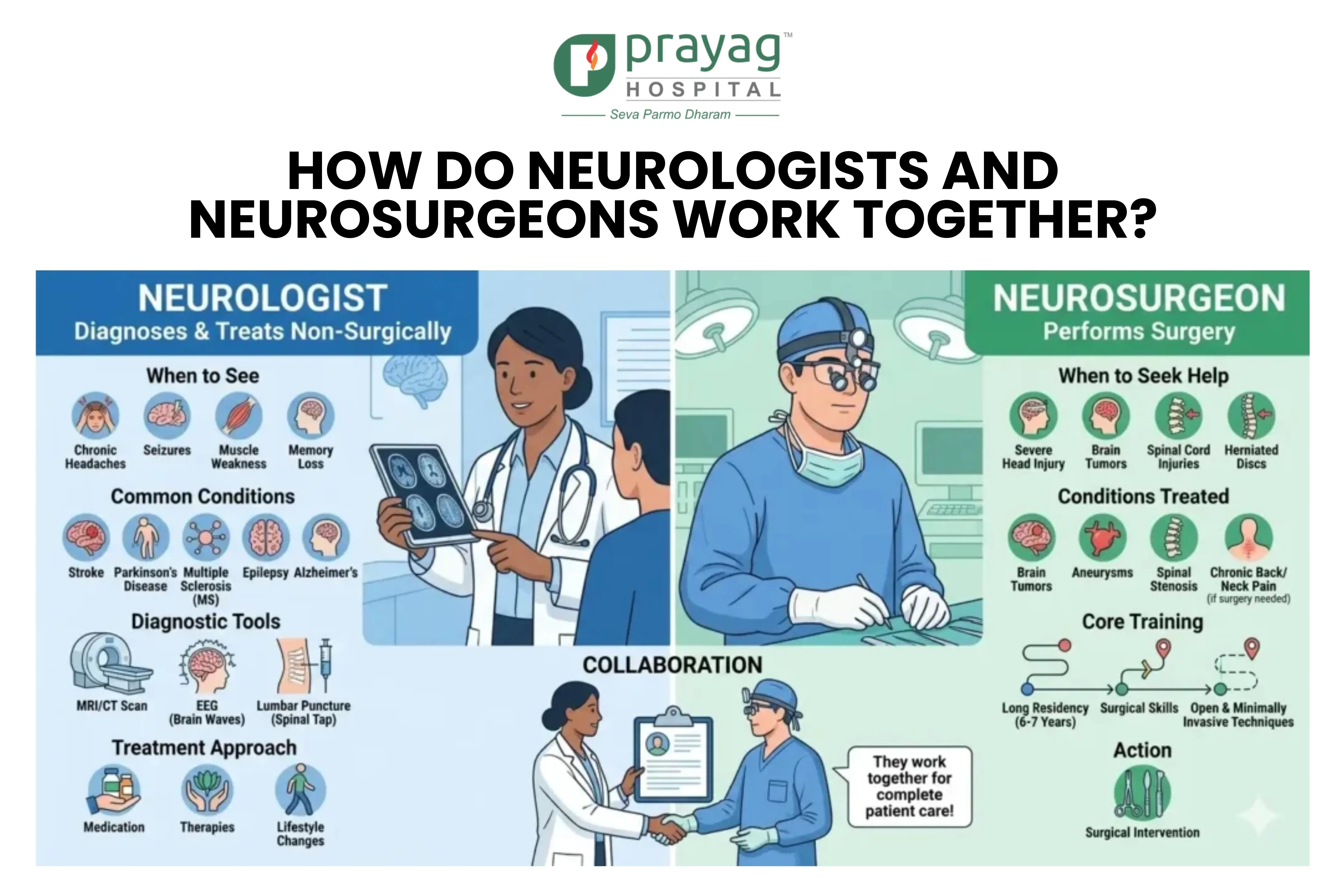
A neurologist is a doctor who treats nervous system problems with medicines, lifestyle changes and other non-surgical methods. A neurologist does not operate.
You may see a neurologist for migraine, epilepsy (fits), stroke, Parkinson's disease, memory loss, nerve pain, vertigo or sleep problems. The neurologist studies your symptoms, orders tests and plans long-term treatment. If you are looking for a neurologist in Greater Noida or Noida for ongoing problems like fits or migraine, this is usually the first doctor to meet.
Understanding Neurosurgery
Neurosurgery is the branch of medicine that treats brain, spine and nerve problems through surgery. A neurosurgeon operates on conditions like brain tumours, bleeding in the brain, serious head injuries, slip disc, spinal cord compression and spine fractures.
Today, neuro surgery is much safer than before. Many spine procedures are done through small cuts using microscopes and modern tools. This often means less pain, a shorter hospital stay and quicker return to daily life.
How Do Neurologists and Neurosurgeons Work Together?
In many cases, both doctors work as a team. For example, a patient with back pain and leg numbness may first see a neurologist. If tests show a slip disc pressing on a nerve and medicines do not help, the neurologist will refer the patient to a neurosurgeon.
After surgery, the neurologist may continue to manage medicines and nerve recovery. This teamwork gives patients a complete plan instead of separate opinions.
Which Symptoms May Indicate a Neurological or Brain-Related Condition?
Many people ignore early signs, thinking they are due to stress or tiredness. Please see a doctor if you notice any of these:
- Frequent or severe headaches, especially new ones after age 40
- Fits or seizures, or sudden blank spells
- Numbness, tingling or weakness in the face, arms or legs
- Trouble speaking, slurred speech or difficulty understanding words
- Sudden loss of vision or double vision
- Dizziness, loss of balance or frequent falls
- Memory loss or confusion
- Shaking of hands (tremors) or stiffness
- Neck or back pain that spreads to the arms or legs
- Loss of control over bladder or bowel
- Balance loss
- Eyes (vision changes)
- Face drooping
- Arm weakness
- Speech trouble
- Time to call for help
In a stroke, every minute counts. Reach the nearest hospital with stroke care immediately.
What Neurological and Neurosurgical Conditions Require Specialist Care?
| Conditions Usually Managed by a Neurologist | Conditions That May Need a Neurosurgeon |
|---|---|
| Migraine and chronic headaches | Brain tumours and spinal tumours |
| Epilepsy and seizures | Brain haemorrhage (bleeding) and aneurysm |
| Stroke (brain attack) | Head injury and spinal injury from accidents or falls |
| Parkinson's disease and movement disorders | Slip disc (herniated disc) and sciatica |
| Dementia and Alzheimer's disease | Cervical and lumbar spondylosis with nerve compression |
| Peripheral neuropathy (nerve damage, common in diabetes) | Spinal stenosis (narrowing of the spinal canal) |
| Multiple sclerosis | Hydrocephalus (fluid build-up in the brain) |
| Vertigo and balance problems | Spine fractures |
How Are Brain, Spine, and Neurological Conditions Diagnosed?
Diagnosis starts with a detailed talk and a physical check. The doctor will test your reflexes, strength, balance, vision and sensation. After that, some tests may be advised:
- CT scan: A quick scan that shows bleeding, fractures and major changes in the brain. Very useful in emergencies.
- MRI scan: Gives clear, detailed pictures of the brain, spinal cord, discs and nerves.
- EEG: Records electrical activity of the brain. Mainly used for fits and seizures.
- EMG and NCV (nerve conduction study): Check how well nerves and muscles are working.
- Blood tests: Help find infections, vitamin deficiencies, sugar levels and other causes.
- X-ray of the spine: Shows bone alignment and spine changes.
- Angiography or Doppler studies: Check blood flow in the brain and neck.
The right test depends on your symptoms. Your doctor will only advise what is needed. Prayag offers imaging and diagnostics and EEG and nerve conduction studies in-house.
What Treatment Options Are Available for Neurological Conditions?
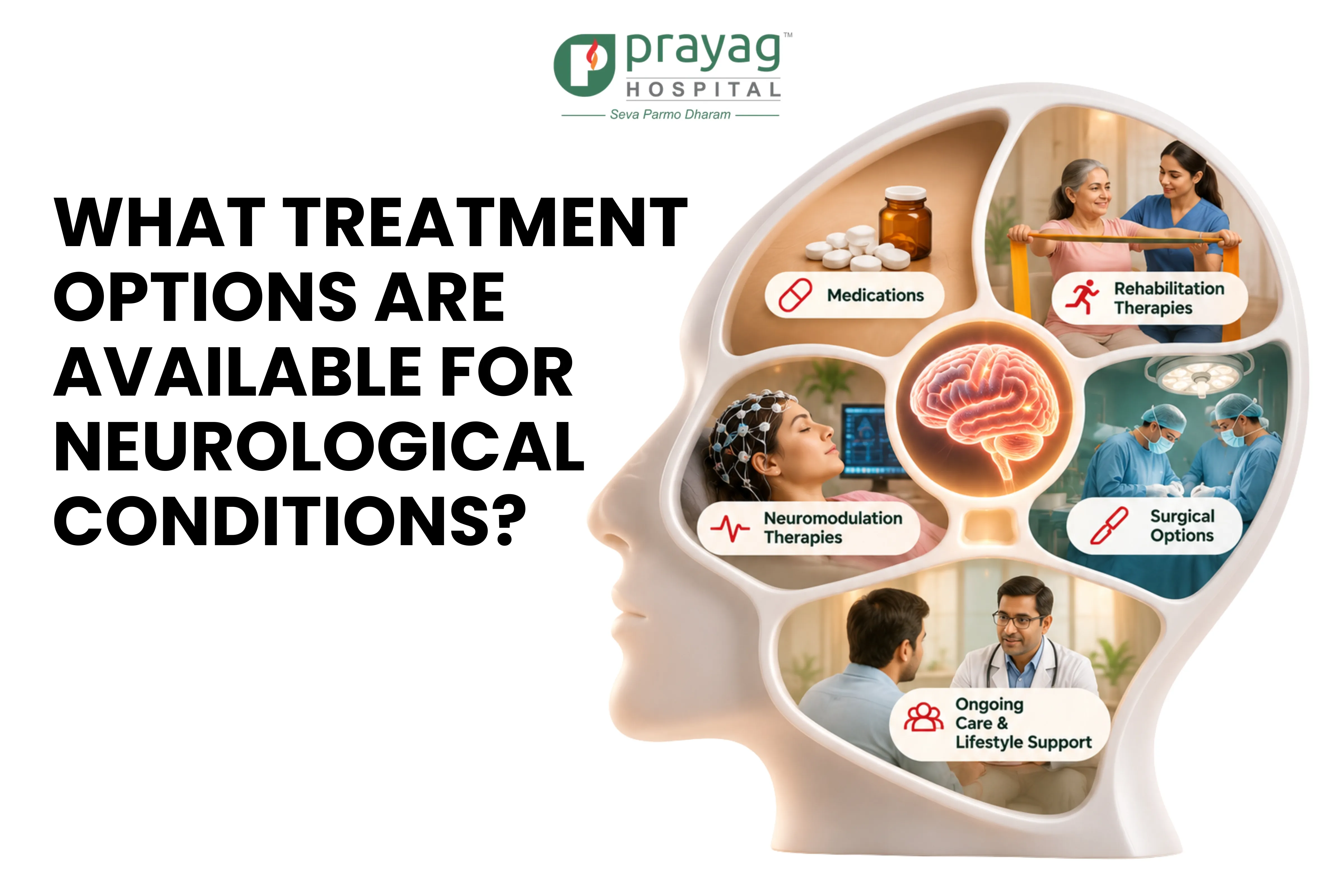
Most neurological problems can be managed without surgery, especially when caught early. Common treatment options include:
Medicines
For migraine, fits, Parkinson's, nerve pain and stroke prevention.
Clot-Dissolving Treatment
For certain stroke patients who reach the hospital early.
Physiotherapy
For back pain, neck pain, weakness and balance problems.
Pain Management
Including nerve blocks and injections for spine pain.
Lifestyle Changes
Better sleep, regular exercise, healthy diet, posture correction, and control of blood pressure and sugar.
Regular Monitoring
For long-term conditions like epilepsy and dementia.
When Is Neurosurgery Required for Brain and Spine Conditions?
Surgery is not the first choice for most patients. A neurosurgeon may advise surgery when:
- There is a tumour in the brain or spine
- There is bleeding in the brain that is pressing on brain tissue
- A serious head or spine injury needs urgent repair
- A slip disc causes severe pain or weakness that does not improve with medicines and physiotherapy for several weeks
- There is loss of bladder or bowel control due to nerve compression
- Spinal cord compression is causing weakness in the arms or legs
Modern spine surgery, including minimally invasive and microscopic procedures, helps many patients get back to normal life faster. Experienced neuro surgeons in Greater Noida and Noida carefully weigh the risks and benefits before suggesting any operation.
What Is Neuro-Critical Care and When Is It Required?
Neuro-critical care is special intensive care for patients with serious brain or spine problems. These patients need close watch 24 hours a day.
It may be required for:
- Major stroke or brain bleed
- Severe head injury
- Patients recovering after brain or spine surgery
- Continuous seizures that do not stop
- Brain infections such as meningitis or encephalitis
In the ICU, doctors and nurses check brain function, breathing, blood pressure and oxygen levels round the clock. Quick action in these early hours can save lives and reduce long-term disability.
How Does Rehabilitation Support Brain and Spine Recovery?
Treatment does not end when a patient leaves the hospital bed. Recovery continues with rehabilitation, which helps the patient regain strength and independence.
Rehabilitation may include:
- Physiotherapy to improve walking, balance and muscle strength
- Occupational therapy to help with daily tasks like eating, dressing and writing
- Speech therapy for patients who have trouble speaking or swallowing after a stroke
- Counselling for patients and families to cope with emotional changes
Starting rehab early, with family support, usually leads to better and faster recovery.
How to Choose the Right Neurologist or Neurosurgeon in Greater Noida?
Choosing the right doctor is an important decision. Here are some simple points to check.
Specialist Qualifications and Clinical Experience
A neurologist should have a DM or DNB in Neurology. A neurosurgeon should have an MCh or DNB in Neurosurgery. Also ask about experience in treating your specific condition.
Diagnostic and Treatment Capabilities
Check if the hospital has CT scan, MRI, EEG, nerve testing and a modern operation theatre. Having these in one place saves time and avoids delays in treatment.
Intensive Care and Multidisciplinary Support
A good hospital should have a 24x7 emergency, an ICU for critical patients, and doctors from other departments like cardiology, medicine and physiotherapy who can support care when needed.
Patient Counselling and Follow-Up
A good doctor explains your condition, treatment options and costs in simple words. Regular follow-up visits are also important, especially for long-term conditions like epilepsy, stroke and Parkinson's disease.
Brain and Spine Care Services at Prayag Hospital
Prayag Hospital & Research Centre in Sector 41, Noida, offers brain and spine care for patients from Noida, Greater Noida, Noida Extension and nearby areas. Being a multi-speciality hospital, Prayag brings neurology, neurosurgery, diagnostics, critical care and rehabilitation together. As a neurology hospital in Noida, its services include:
- Neurology OPD for headache, migraine, epilepsy, stroke, Parkinson's disease, vertigo and nerve problems
- Neurosurgery consultation for brain and spine conditions, including slip disc, spine injury and brain tumours
- 24x7 emergency care for stroke, head injury and accidents
- CT scan, radiology and lab services for faster diagnosis
- ICU support for critical neurological patients
- Physiotherapy and rehabilitation for recovery after stroke, injury or surgery
To book an appointment or speak with the neurology and neurosurgery team, call Prayag Hospital at 0120-4021900.
Address: Prayag Hospital & Research Centre, J-206/A1, Sector 41, Noida, Uttar Pradesh 201301