


- Role of Anesthesiology in Surgery
- What a Medical Anesthesiologist Does
- Types of Anesthesia
- Pre-Anesthetic Check-Up
- Patient Safety During Anesthesia
- Anesthesiology and Critical Care
- Recovery After Anesthesia
- Specialized Anesthesia Services
- Factors in Choosing Anesthesia
- Anesthesiology at Prayag Hospital
- Frequently Asked Questions
When most people think about surgery, they think about the surgeon. But there is another doctor in the operation theatre who plays an equally important role in keeping you safe from start to finish. That doctor is a medical anesthesiologist. At Prayag Hospital, a trusted multispecialty hospital in Noida Sector 41, our anesthesiology and critical care team makes sure every patient goes through surgery comfortably, safely and without pain.
In this blog, we explain what anesthesia is, how general anesthesia services work, what happens before and after surgery, and why choosing the right hospital in Noida for anesthesia care makes a real difference.
Understanding the Role of Anesthesiology in Modern Surgical Care
Modern surgery is safer today than ever before, and anesthesiology is a big reason for that. Many complex operations, such as heart surgery, joint replacement, spine surgery and cancer surgery, are only possible because anesthesia keeps the patient calm, still and free of pain.
Anesthesiology is not just about "putting a patient to sleep." It covers the full care of a patient's breathing, heart rate, blood pressure, oxygen levels and comfort during a procedure. It also includes pain management after surgery and care for very sick patients in the ICU. This is why leading hospitals in Noida treat anesthesiology and critical care as one connected department.
What Is Anesthesiology and What Does a Medical Anesthesiologist Do?
Anesthesiology is the branch of medicine that deals with blocking pain and managing the body's vital functions during surgery, tests and other procedures. A medical anesthesiologist is a qualified doctor (MBBS with MD, DNB or DA in Anesthesiology) who is trained to give anesthesia, watch over the patient's body during surgery, and handle any emergency that may come up.
The anesthesiologist's work is divided into three stages.
Responsibilities Before Surgery
Before surgery, the anesthesiologist meets the patient to understand their health. They review medical history, current medicines, allergies, past surgeries and any earlier reaction to anesthesia. Based on this, they plan the type and dose of anesthesia that suits the patient best. They also explain the process in simple words so that the patient and family feel relaxed and informed.
Responsibilities During Surgery
During surgery, the anesthesiologist stays with the patient the whole time. They give the anesthesia, keep checking heartbeat, blood pressure, breathing and oxygen levels, and adjust medicines as needed. If the patient loses blood or shows any sudden change, the anesthesiologist acts quickly with fluids, blood or emergency medicines. In simple terms, while the surgeon focuses on the operation, the anesthesiologist focuses on keeping the patient alive, stable and pain-free.
Responsibilities After Surgery
After surgery, the anesthesiologist helps the patient wake up safely. They watch the patient in the recovery room, control pain, manage nausea or shivering, and decide when the patient is ready to move to the ward or go home. For high-risk patients, they may shift the patient to the ICU for closer care.
What Are the Different Types of Anesthesia Used in Surgical Procedures?
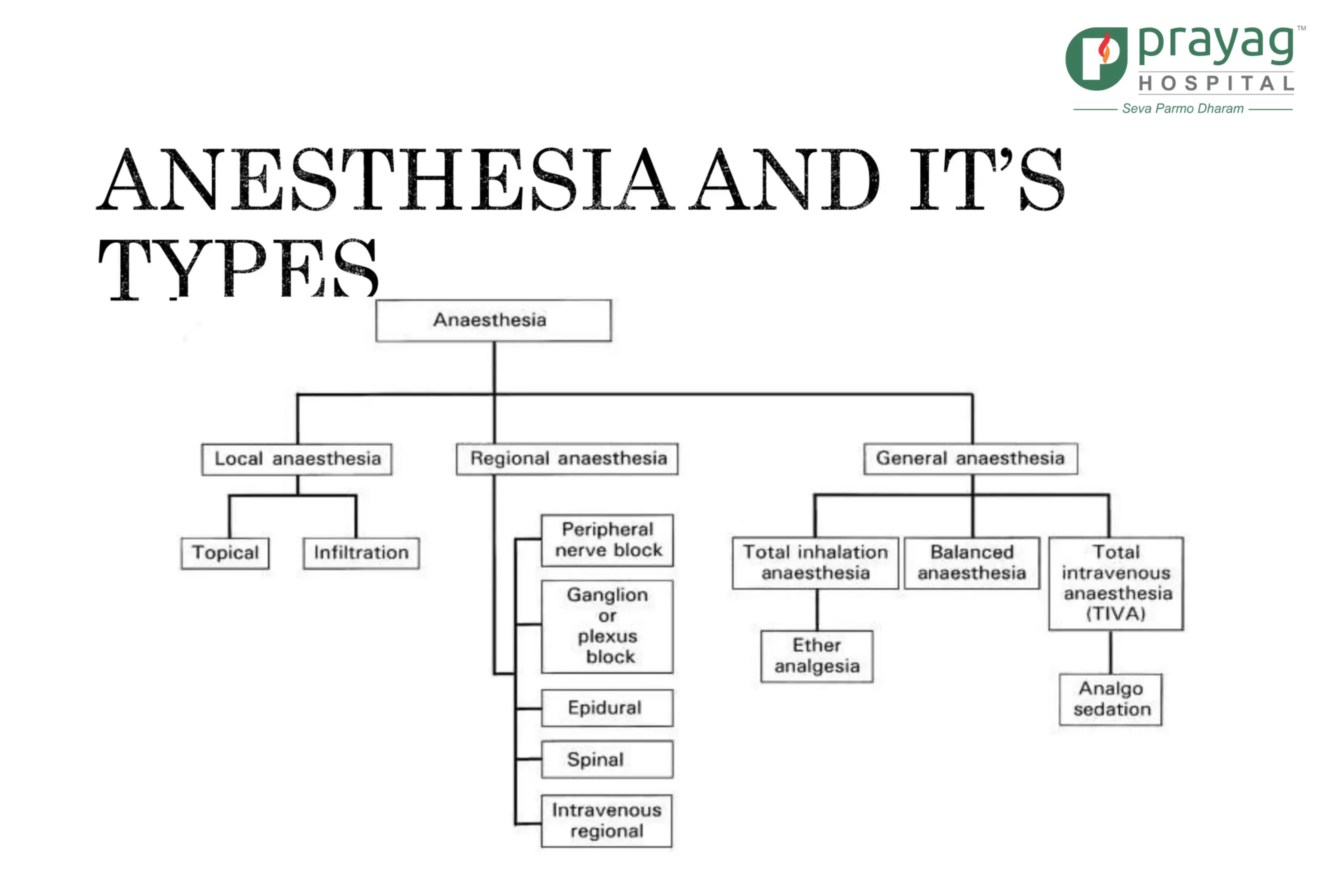
Not every surgery needs the same kind of anesthesia. The choice depends on the type of operation, how long it will take, and the patient's health. The main types are:
General Anesthesia
The patient is fully unconscious and feels nothing. It is used for major surgeries such as abdominal, heart, brain or long orthopaedic operations. Breathing is supported with a tube or mask.
Regional Anesthesia
Only a large part of the body is made numb while the patient stays awake or lightly sedated. Spinal and epidural anesthesia are common examples, often used for C-section, knee replacement, hernia and urology surgeries.
Local Anesthesia
A small area is numbed with an injection. It is used for minor procedures like stitches, small lump removal or some dental and eye procedures.
Sedation (Monitored Anesthesia Care)
Medicines make the patient relaxed and drowsy but not fully asleep. It is often used for endoscopy, colonoscopy, cataract surgery and some day care procedures.
At Prayag Hospital, the anesthesiologist explains each option and helps the patient understand why a certain type is best for them.
What Is a Pre-Anesthetic Check-Up and Why Is It Necessary?
A pre-anesthetic check-up (PAC) is a health review done a few days or hours before surgery. It helps the medical anesthesiologist spot any risk early and plan safe anesthesia. Skipping this step can lead to surprises in the operation theatre, so it is a standard part of care at every good surgical hospital in Noida.
Medical History and Physical Evaluation
The doctor asks about conditions like diabetes, high blood pressure, heart disease, asthma, thyroid problems, kidney or liver disease, and sleep apnea. They also ask about smoking, alcohol use, blood thinners and herbal supplements. A physical check of the heart, lungs, airway, mouth opening and neck movement helps them judge how easy it will be to manage breathing during surgery.
Diagnostic Investigations Before Anesthesia
Based on age and health, the doctor may ask for blood tests (CBC, sugar, kidney and liver function, clotting profile), ECG, chest X-ray, and in some cases echocardiography or lung function tests. These tests show how well the body can handle anesthesia and surgery.
Fasting Instructions and Pre-Surgical Preparation
Patients are usually asked not to eat solid food for about 6 to 8 hours before general anesthesia, though clear fluids like water may be allowed until around 2 hours before, as advised by the doctor. Fasting keeps the stomach empty, which lowers the risk of food or acid going into the lungs. The team also tells the patient which regular medicines to continue or stop on the day of surgery.
Individualized Anesthesia Risk Assessment
After all checks, the anesthesiologist grades the patient's overall fitness, often using the ASA (American Society of Anesthesiologists) scale. This helps decide the safest anesthesia plan, whether extra monitoring is needed, and whether an ICU bed should be kept ready after surgery.
How Is Patient Safety Maintained During Anesthesia?
Safety is built into every step. The patient is connected to monitors that track heart rhythm, blood pressure, oxygen level, carbon dioxide in each breath and body temperature. Modern anesthesia workstations, airway tools, defibrillators and emergency medicines are kept ready. A safe surgery checklist confirms the patient's identity, procedure and allergies before anesthesia begins. Most importantly, a trained anesthesiologist stays beside the patient until the procedure ends.
What Is the Relationship Between Anesthesiology and Critical Care?
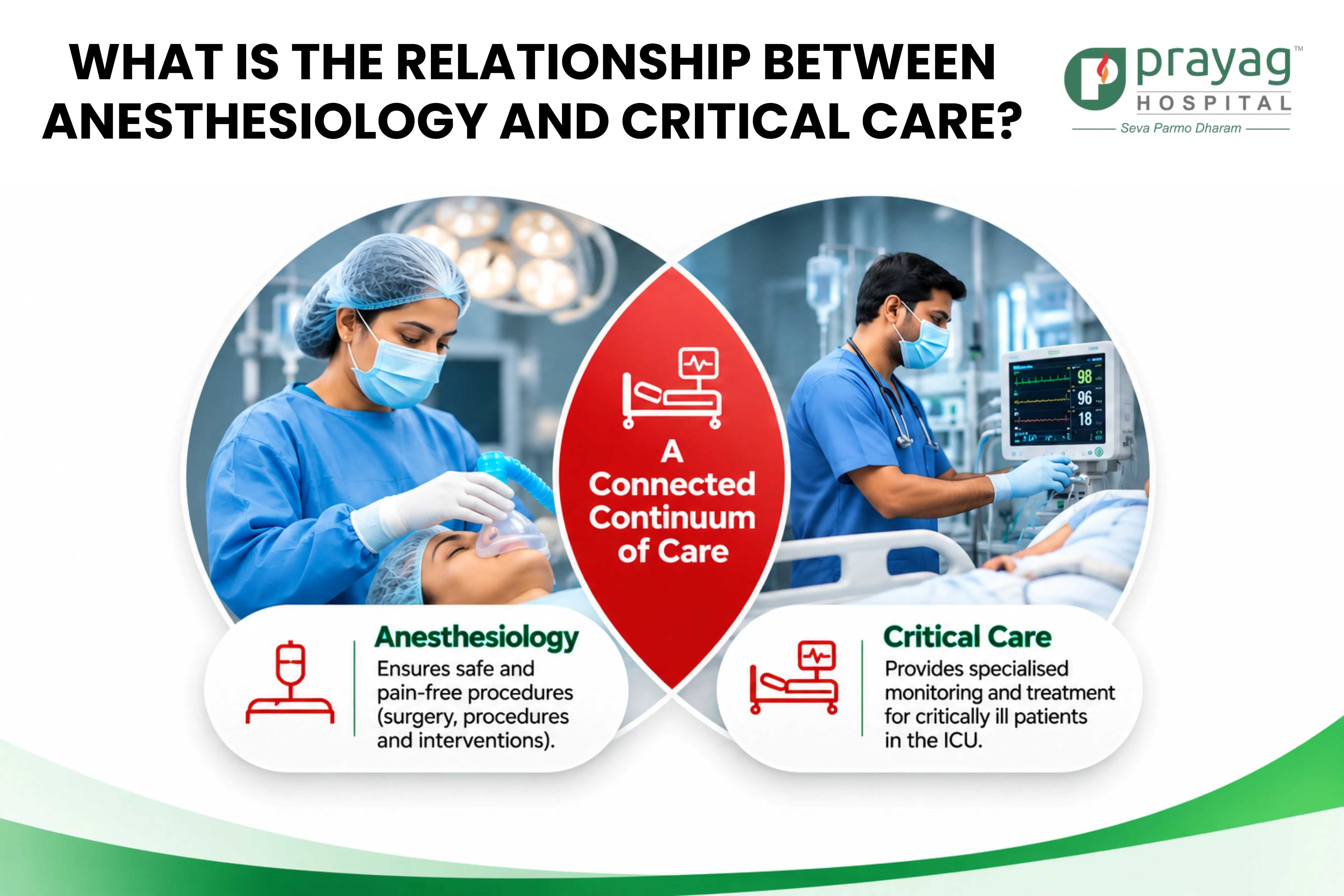
Anesthesiologists are experts in airway care, breathing support, fluids and blood pressure control. These same skills are needed in the ICU. That is why many anesthesiologists also work as critical care specialists, looking after patients on ventilators, patients in shock, and those recovering from major surgery, accidents or serious infections. A hospital with strong anesthesiology and critical care support can handle emergencies better, which is why patients look for a 24x7 critical care hospital in Noida.
What Happens During Recovery After Anesthesia?
After surgery, the patient is moved to the recovery room (PACU). Nurses and doctors watch breathing, pain, blood pressure and alertness. Some patients feel sleepy, cold, thirsty or slightly sick, which is normal and short-lived. Once stable, the patient goes to the ward or, for day care surgery, is sent home with clear instructions.
Patients should not drive or sign important documents for 24 hours after general anesthesia.
Specialized Anesthesia Services for Different Patient Groups

- Children: Pediatric anesthesia uses child-safe doses and a gentle approach to reduce fear.
- Pregnant women: Obstetric anesthesia supports C-sections and painless normal delivery through epidural.
- Elderly patients: Extra care is taken for heart, memory and kidney health.
- Patients with heart, lung or kidney disease: Closer monitoring and tailored medicines keep risk low.
- Chronic pain patients: Pain management services include nerve blocks and post-surgery pain control.
What Factors Influence the Selection of Anesthesia?
The anesthesiologist considers the type and length of surgery, the patient's age and overall health, existing illnesses, past reactions to anesthesia, current medicines, the patient's own comfort and choice, and the surgeon's needs. The final plan balances safety, comfort and quick recovery.
Anesthesiology Services at Prayag Hospital, Noida
Prayag Hospital in Sector 41, Noida, offers complete anesthesiology and critical care services under one roof. Patients from Noida, Greater Noida and nearby areas choose us because of:
- Experienced medical anesthesiologists for general, regional, local and sedation anesthesia
- Modular operation theatres with advanced monitoring
- Detailed pre-anesthetic check-ups before every planned surgery
- Well-equipped ICU with round-the-clock intensivist support
- Painless delivery, pediatric anesthesia and post-surgery pain management
- 24x7 emergency and trauma care
If you are looking for the best hospital in Noida for safe surgery and anesthesia care, call Prayag Hospital at 0120-4021900 to book a consultation.
Conclusion
Anesthesia is the quiet backbone of safe surgery. From the first check-up to full recovery, the medical anesthesiologist protects your comfort and safety at every step. Choosing a hospital with strong general anesthesia services and anesthesiology and critical care support gives you peace of mind. At Prayag Hospital, Noida, our team is here to make your surgery safe, smooth and pain-free.